

Real estate branding: a founder's guide to property and brokerage brands
Real estate branding is the identity, voice, and trust signals that make a property business memorable at high deal value. Here's how to build one.
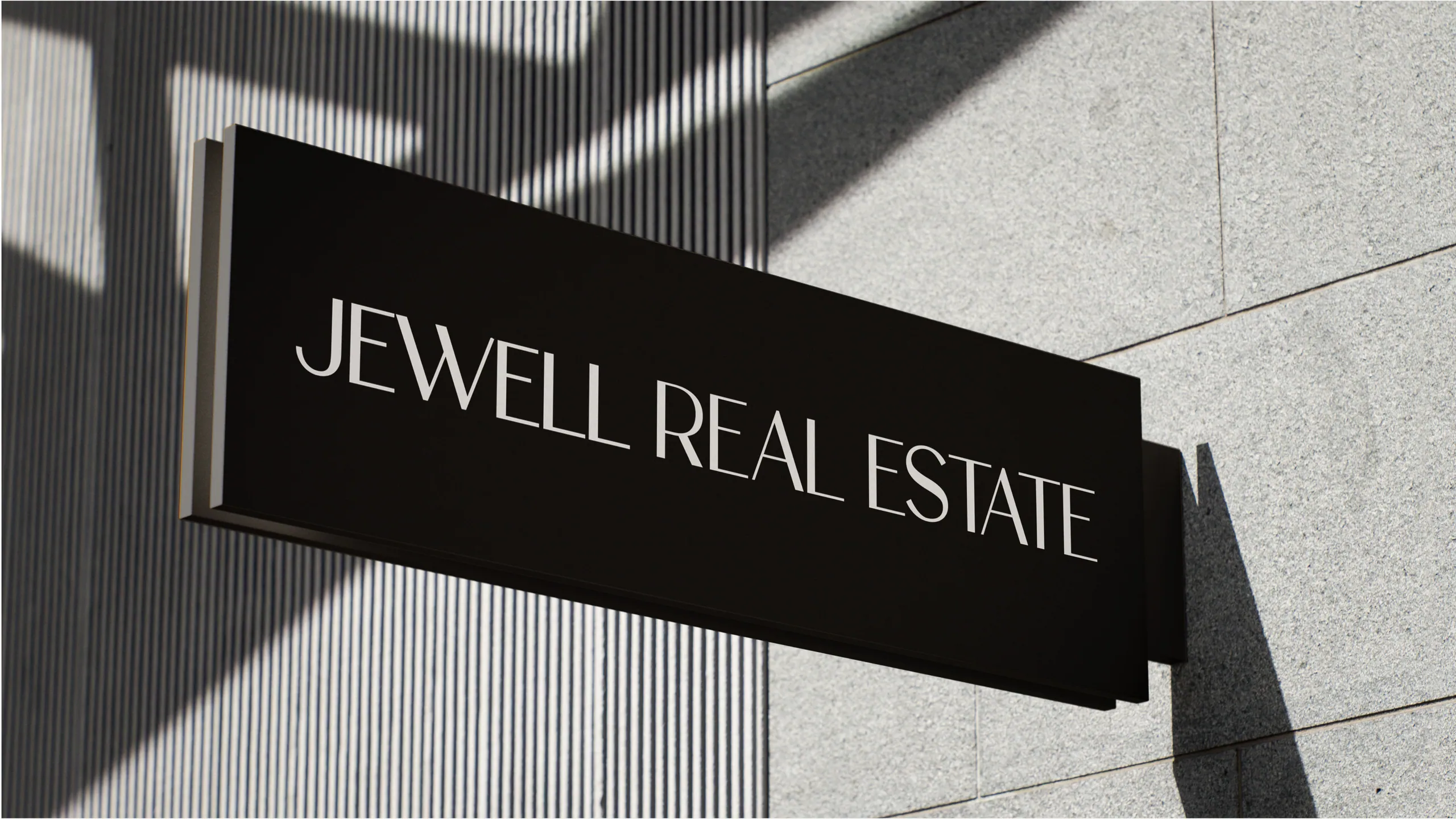
Real estate branding is the system of identity, voice, and trust signals that makes a property business recognizable and credible across every place a buyer or investor encounters it. You brand a property business by deciding what you stand for, designing a consistent identity around it, and applying that identity to signage, listings, decks, and digital presence so a single deal-defining impression survives from first search to closing table.
That is the whole discipline in two sentences. The rest of this guide explains why it matters more in property than in almost any other category, and how a real estate branding program actually gets built.
Why does real estate branding matter at high deal value?
Because a property transaction is one of the largest decisions a person makes, and trust does most of the closing. A weak brand forces every agent and every listing to re-earn credibility from zero.
Most consumer brands sell a $40 product where a mistake costs the buyer a dinner. A brokerage sells a $900,000 decision where a mistake reshapes someone’s next decade. Buyers and investors read brand cues as proxies for competence: if the signage looks careless, the assumption is the diligence will be too. The brand is not decoration on top of the deal. It is the first piece of evidence the client uses to decide whether to trust you with the deal at all.
This is why developers and brokerages that look generic leave money on the table. We have measured a 2.4x average conversion uplift across the brands we rebuild, and in property the mechanism is straightforward. A coherent identity removes hesitation at the exact moment a high-stakes buyer is deciding whether you are serious.
What goes into a real estate brand identity?
A real estate brand identity is a wordmark, a restrained palette, a typographic system, and a set of applications built specifically for the surfaces property lives on. Those surfaces are unusual, which is why generic identity work fails here.
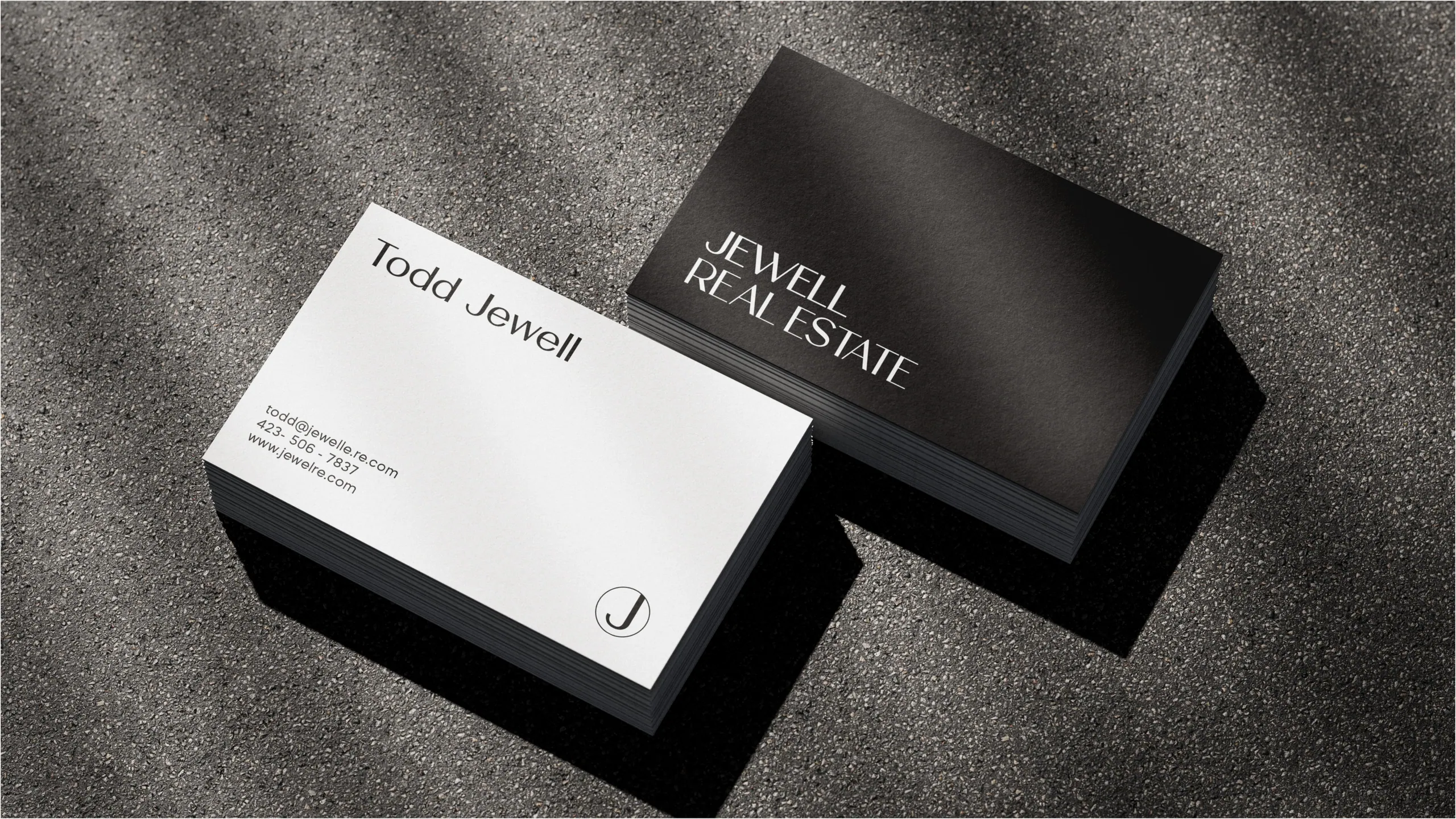
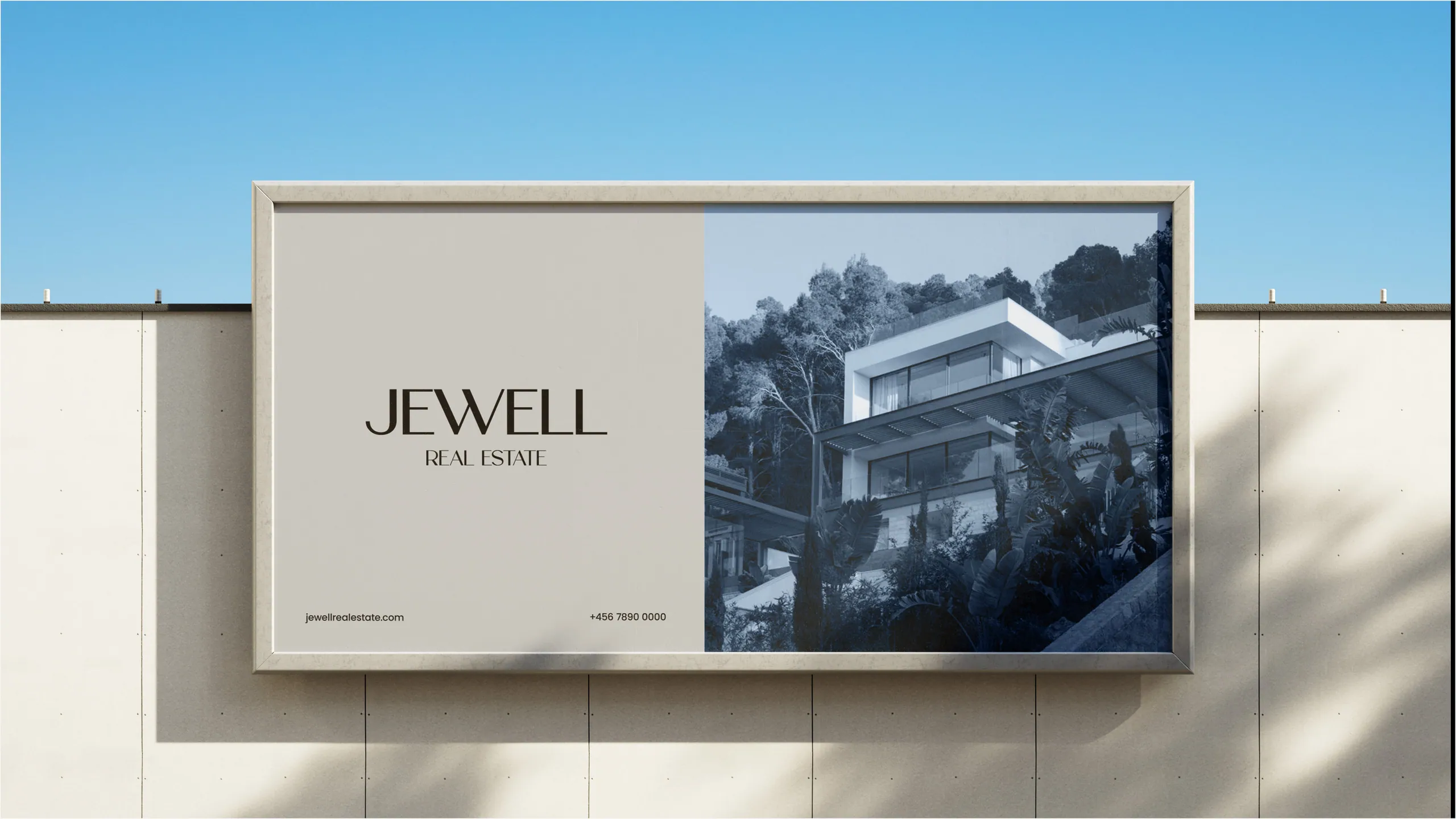
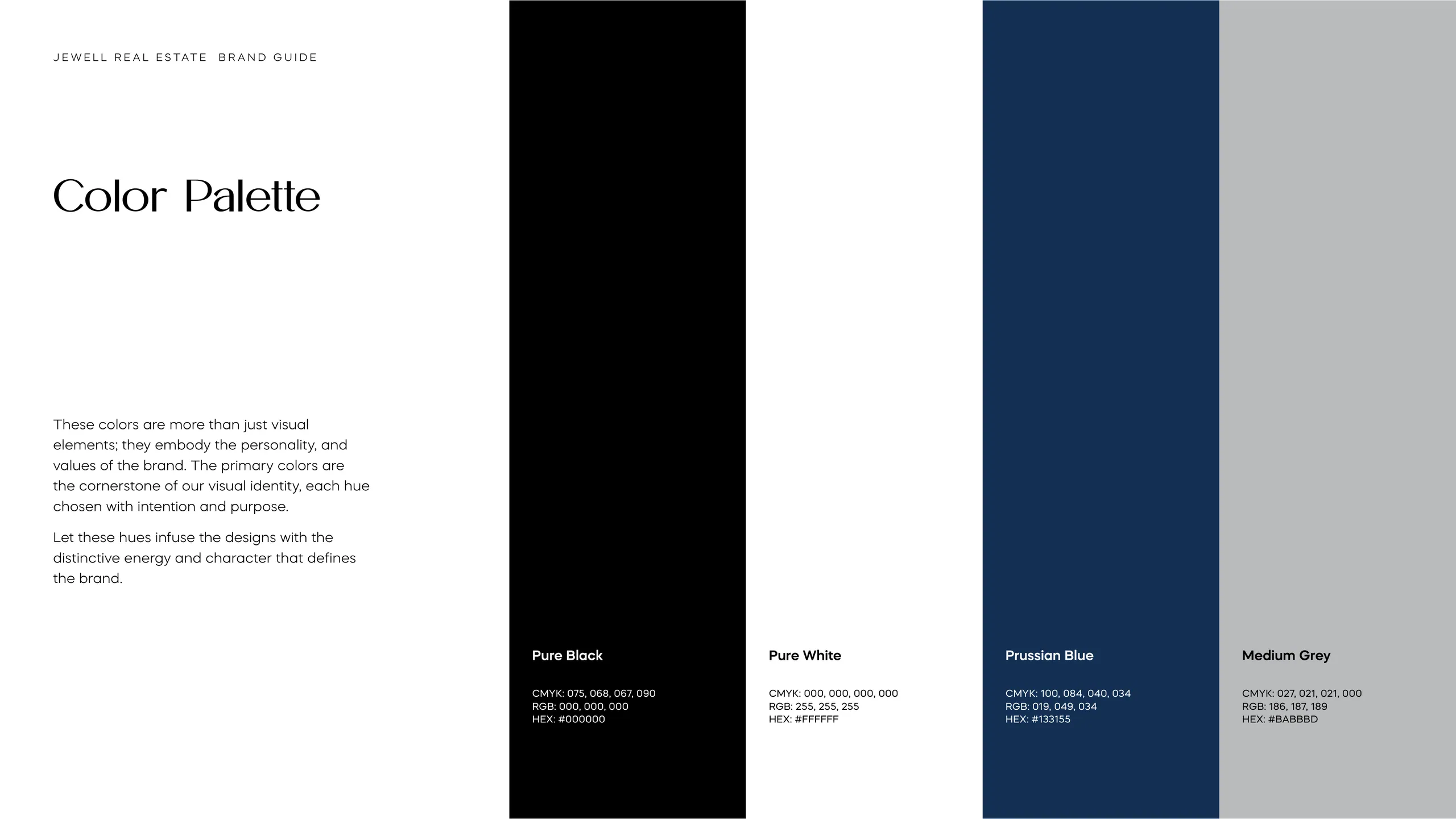
A property brand has to hold up at the size of a yard sign in a front lawn and at the size of a favicon in a browser tab. It appears on environmental signage, printed property collateral, investor decks, and listing portals you do not control. Jewell Real Estate is a clear example: a monochromatic system of pure black, warm white, and navy anchored by a serif wordmark, designed to carry authority on a physical sign and a phone screen with equal confidence. The palette is narrow on purpose. Restraint reads as expensive, and expensive reads as competent.
The deliverable that matters most is the guideline document. Real estate brands get applied by photographers, sign printers, listing coordinators, and franchise sub-offices who never spoke to the designer. Without a guideline, the identity drifts within a quarter. With one, it stays consistent across people who have never met.
How do you brand a property development?
You brand a property development by treating the project as its own product with its own audience, then giving it a name, a story, and a visual world that sells the lifestyle before a single unit is built. Development branding is closer to launching a startup than refreshing a logo.
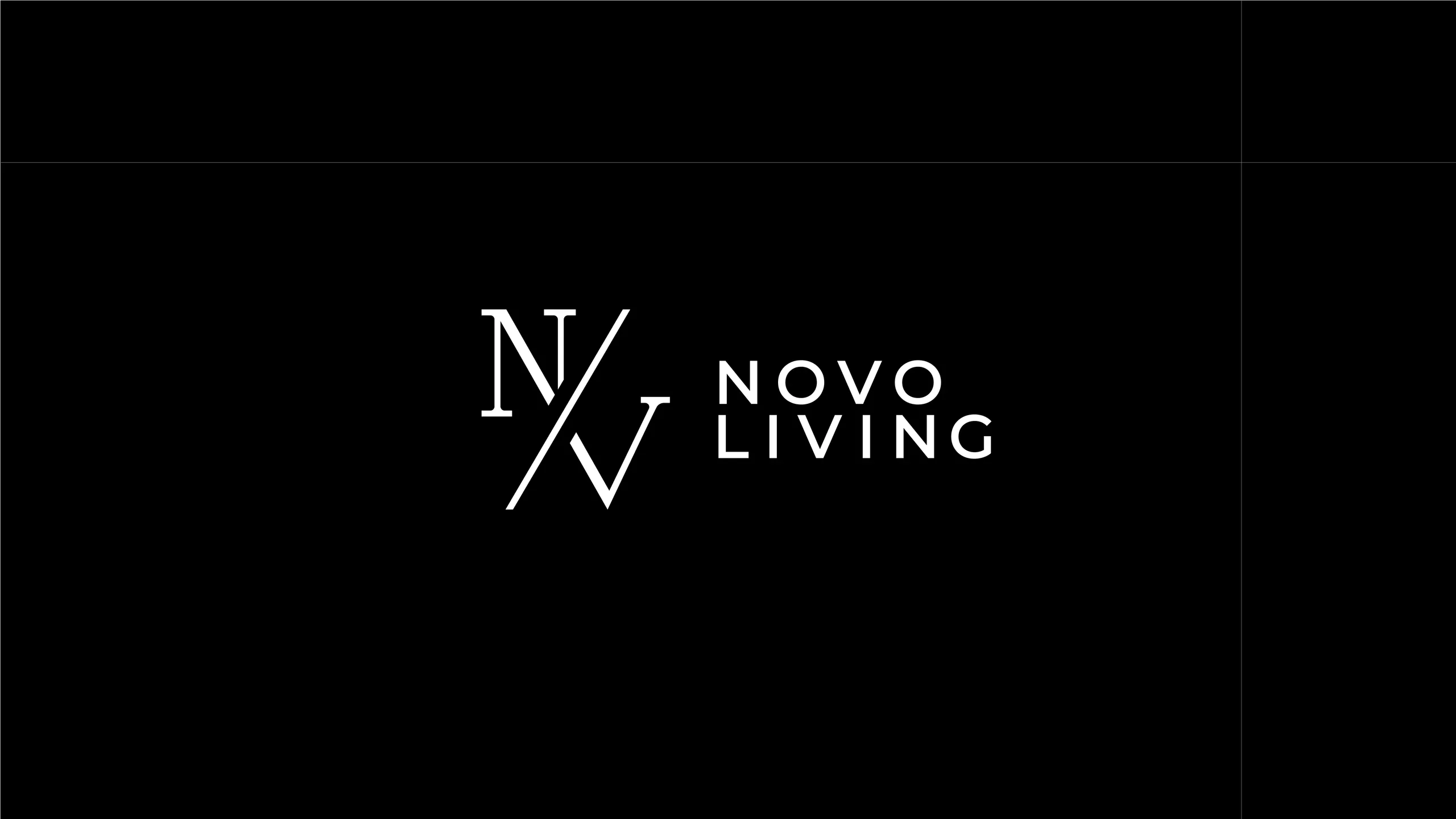
A development sells something that does not physically exist yet. The brand has to make the unbuilt feel inevitable. That means a name that carries the positioning, a narrative that tells investors and buyers who this is for, and imagery that renders the future credibly. Novo Living is the pattern: a residential development brand built to communicate a way of living, not a list of square footage. The work answers the buyer’s real question, which is never “how many bedrooms” but “who am I if I live here.”
Development branding also has a tighter clock than most brand work. Sales centers open, pre-launch campaigns run, and the identity has to be ready before the marketing spend starts. A drifting timeline costs real money in financing carry, which is one reason a fixed 7-day sprint suits this work better than an open-ended agency engagement.
How do you differentiate a brokerage?
You differentiate a brokerage by branding the firm’s point of view, not its service list, because every brokerage offers roughly the same service. Buying, selling, listing, negotiating. The list is identical, so the list cannot be the differentiator.
What separates brokerages is posture: who they serve, how they think, and what they refuse to do. The brand has to make that posture legible in seconds. A luxury brokerage and a high-volume transactional brokerage should be unmistakable from a single business card, because their clients want opposite things. When the brand is vague, agents compete on commission alone, which is the worst possible ground to fight on.
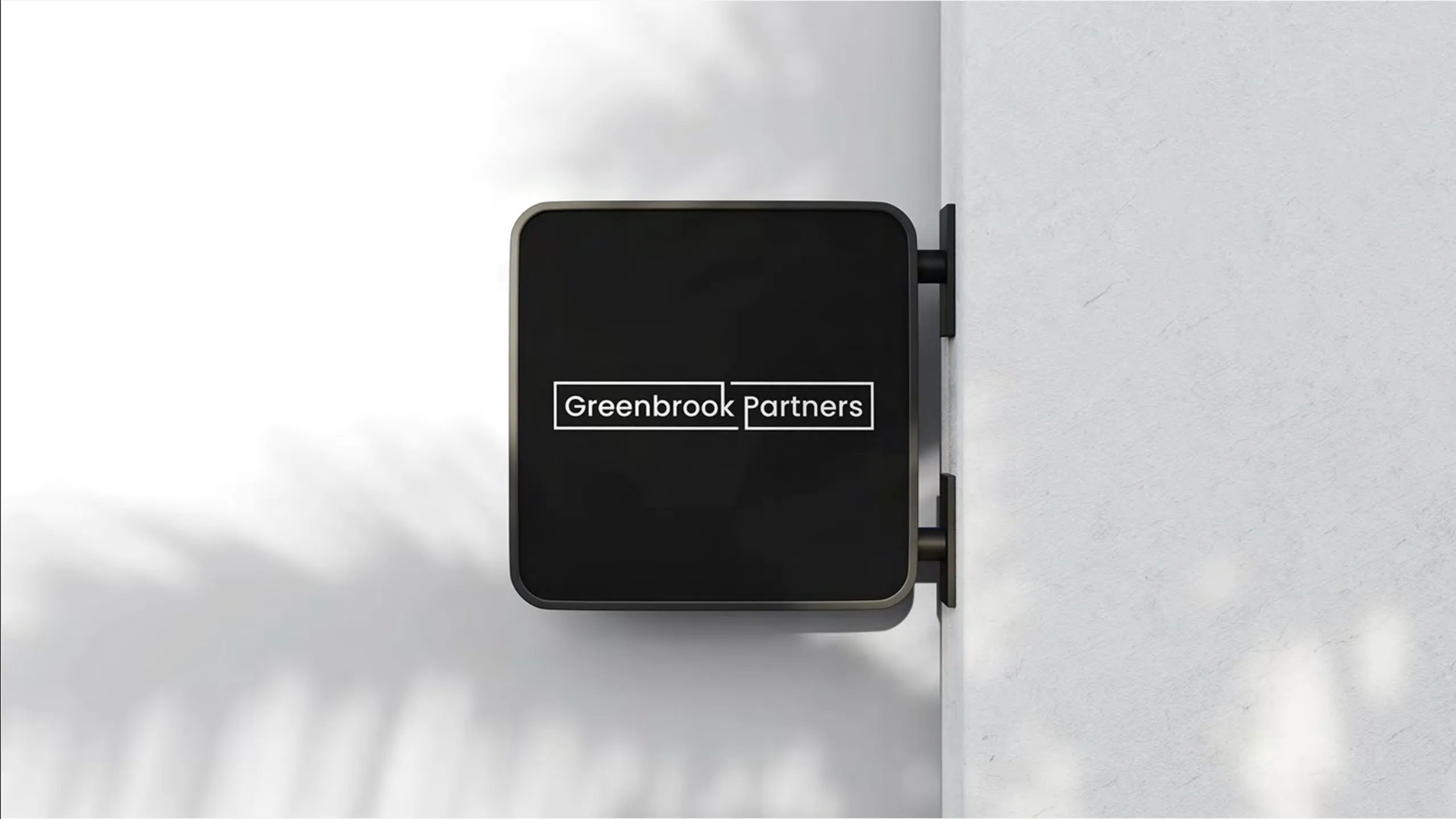
Greenbrook Partners shows the move at the firm level: a property partnership identity built to signal institutional seriousness rather than transactional hustle. The brand does recruiting work too. Strong agents choose firms whose brand makes them look better to their own clients. A brokerage brand is a hiring asset as much as a marketing one.
Where does technology branding fit in property?
Proptech and property-intelligence companies need branding that signals data credibility without losing the human warmth a property decision demands. This is a harder balance than pure SaaS, because the buyer is emotional and analytical at once.
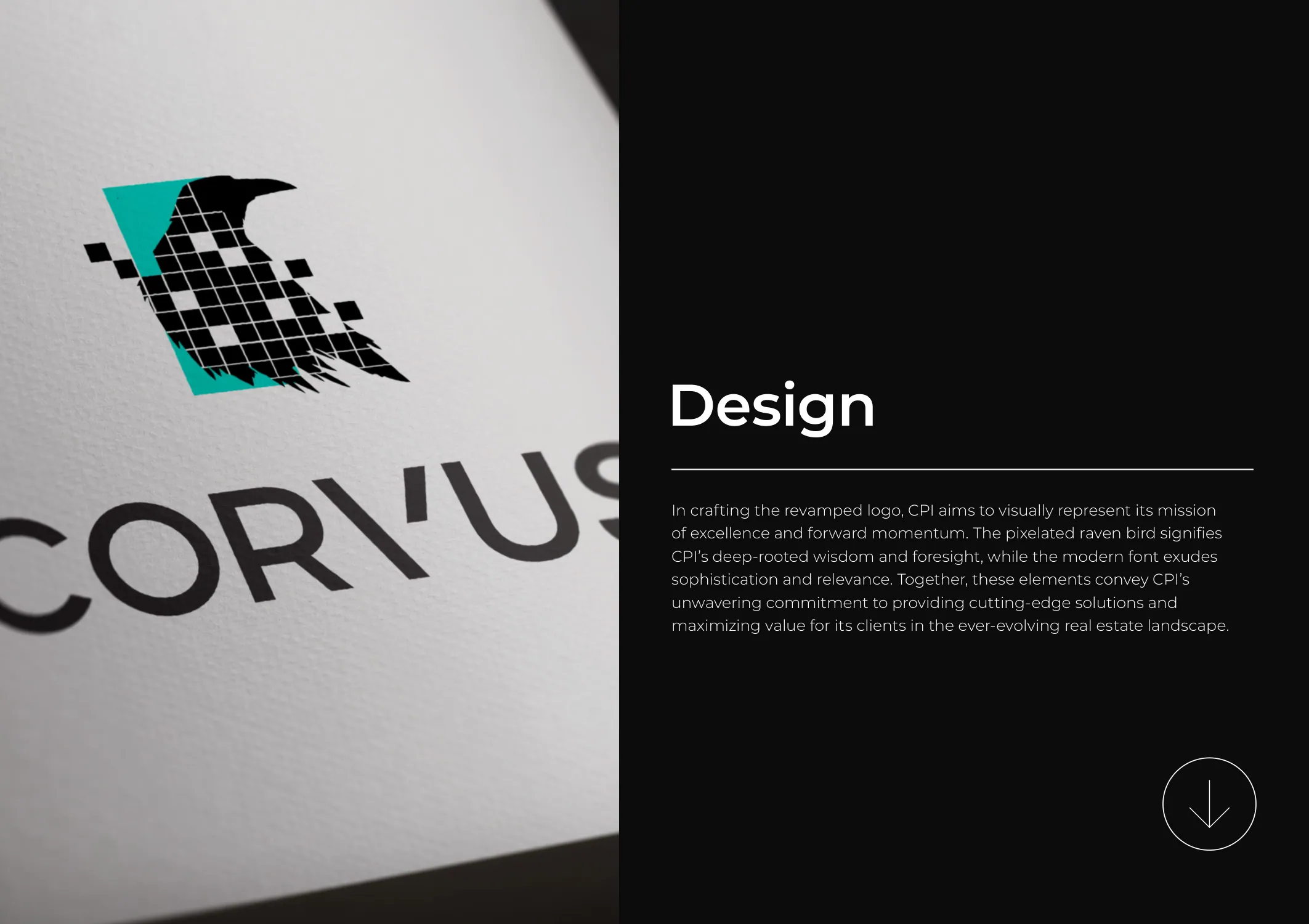
A property-tech brand that looks too clinical loses the agent who wants a partner. One that looks too soft loses the institutional investor who wants rigor. Corvus Property Intelligence resolves the tension with a raven-pixel mark that fuses analogue craft with digital data logic. The identity tells both audiences what the product is in one symbol: intelligence you can trust, built by people who understand property as a human business, not just a dataset.
This category is growing fast, and the branding stakes are rising with it. As more of the transaction moves through software, the interface becomes the brand. Trust gets decided in the product, not just the pitch deck.
What does a real estate branding program cost in time?
A complete property brand can be built in seven days when the process is designed for it. That is the model we run, and it fits the property timeline better than a quarter-long engagement.
The sprint front-loads decisions. Day one is positioning. Day two is identity. The rest is application and launch assets, so by the end of the week a development has a sales-ready brand, a brokerage has a recruiting-ready brand, and a proptech firm has a fundraising-ready one. The short clock is doing useful work. It kills the fourth round of logo revisions that adds polish nobody notices and delays a launch the financing can’t afford to wait on.
We have run this for 7 real estate brands and more than 1,000 brands overall since 2018. Property is one of the categories where the speed pays back most directly, because every week a development sits unbranded is a week of carrying cost with no sales momentum to offset it.
How do you keep a property brand consistent at scale?
You keep it consistent with a guideline system and a token-based design language that lets non-designers apply the brand correctly without supervision. Consistency is an operational problem, not an aesthetic one.
A brokerage with twenty agents, or a developer with three concurrent projects, cannot route every sign and flyer through a designer. The brand has to be self-serve. That means documented color tokens, locked type pairings, signage templates, and clear rules for what is and is not allowed. The agents who apply it will never read a 60-page bible, so the system has to make the right choice the easy choice. Build the guardrails once and the brand holds across people, offices, and years.
Where to start
Real estate branding earns its return because the deals are large and trust is the deciding factor. The fastest way to find out what a property brand is costing you is to look at it the way a first-time buyer does, then decide whether it makes you look like the obvious choice. If it does not, that is fixable, and faster than most founders expect.
If you are launching a development, repositioning a brokerage, or building a property-tech company, book a call and we will walk you through what a real estate branding sprint would produce for your specific business.
More from the blog
Beauty branding: how to build a cosmetics brand that sells on shelf and on social
Beauty branding is the system of identity, packaging, and story that makes a cosmetics brand recognizable and worth paying for. Here's how to build one.
Brand sprint vs traditional agency: which rebrand is right for you?
A 7-day brand sprint delivers the same core artefacts as an 8-12 week agency rebrand, at a fixed price. It removes waiting, not work. Here's the honest comparison.
Branding for AI and tech startups: how to look as credible as your technology
Brand an AI or tech startup by making the technology legible, the category clear, and the proof obvious. Here's the playbook we use on every build.