

Fashion branding: how to build a fashion or jewelry brand people want to wear
Fashion branding is the system of meaning, look, and language that makes a label desirable. Here is how to build one that converts, from positioning to launch.
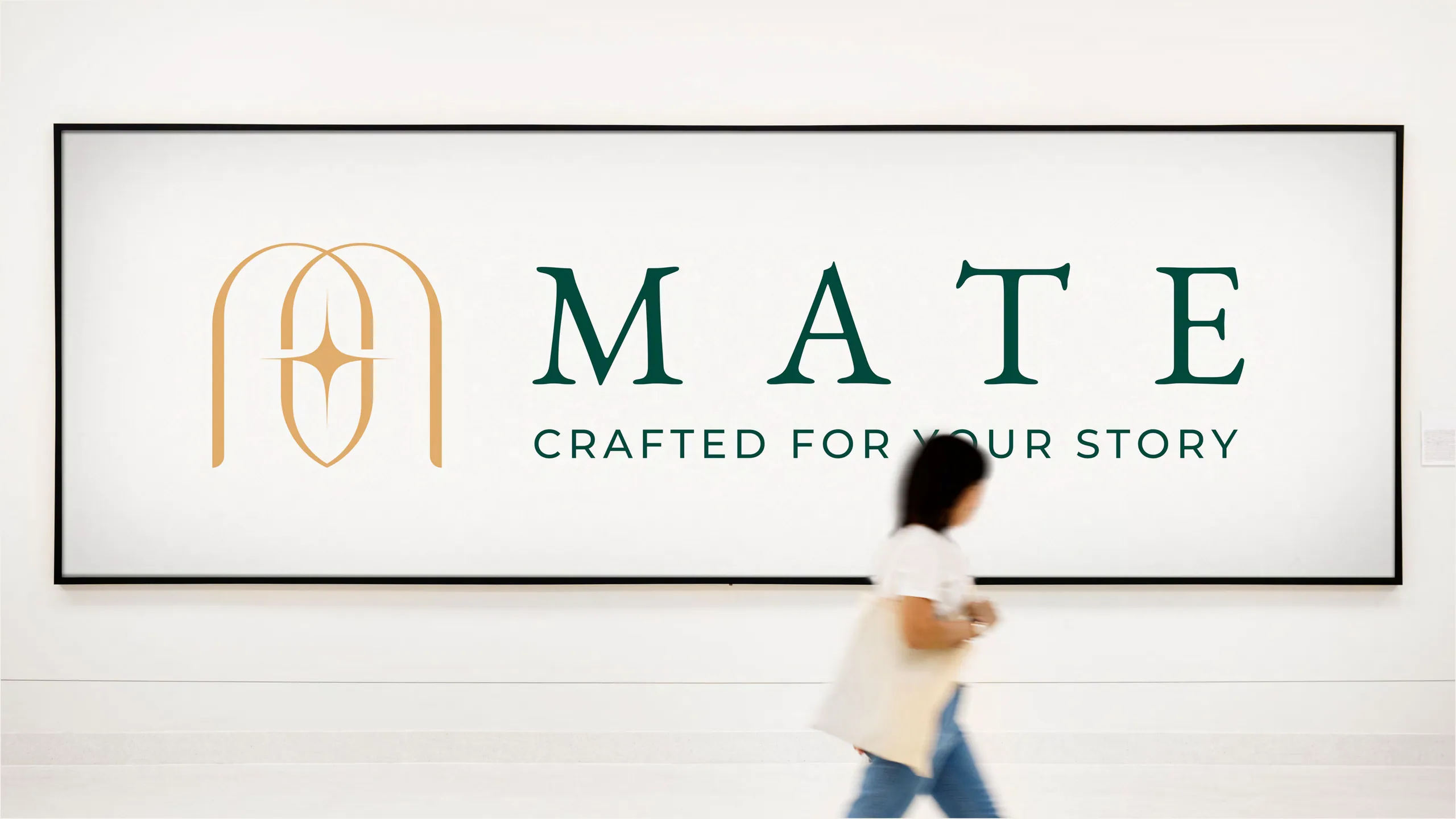
Fashion branding is the system of meaning, look, and language that turns a clothing or jewelry label into something people want to be seen wearing. It is built from four parts working together: a clear position, a visual identity, a consistent voice, and the proof that the product lives up to both.
Most founders confuse the logo with the brand. The logo is a signature. The brand is everything the customer feels before, during, and after they buy. In fashion and jewelry, where the product is partly about identity, that feeling is the whole game. Below is how we build it, drawn from fashion branding work across 13 fashion and jewelry labels.
What does a fashion brand identity include?
A fashion brand identity is the full visual and verbal kit that makes a label recognizable: logo system, type, color, photography direction, packaging, and voice. A single mark is not enough. The customer meets your brand across a feed, a hang tag, a shipping box, and a storefront, and it has to read as one thing every time.
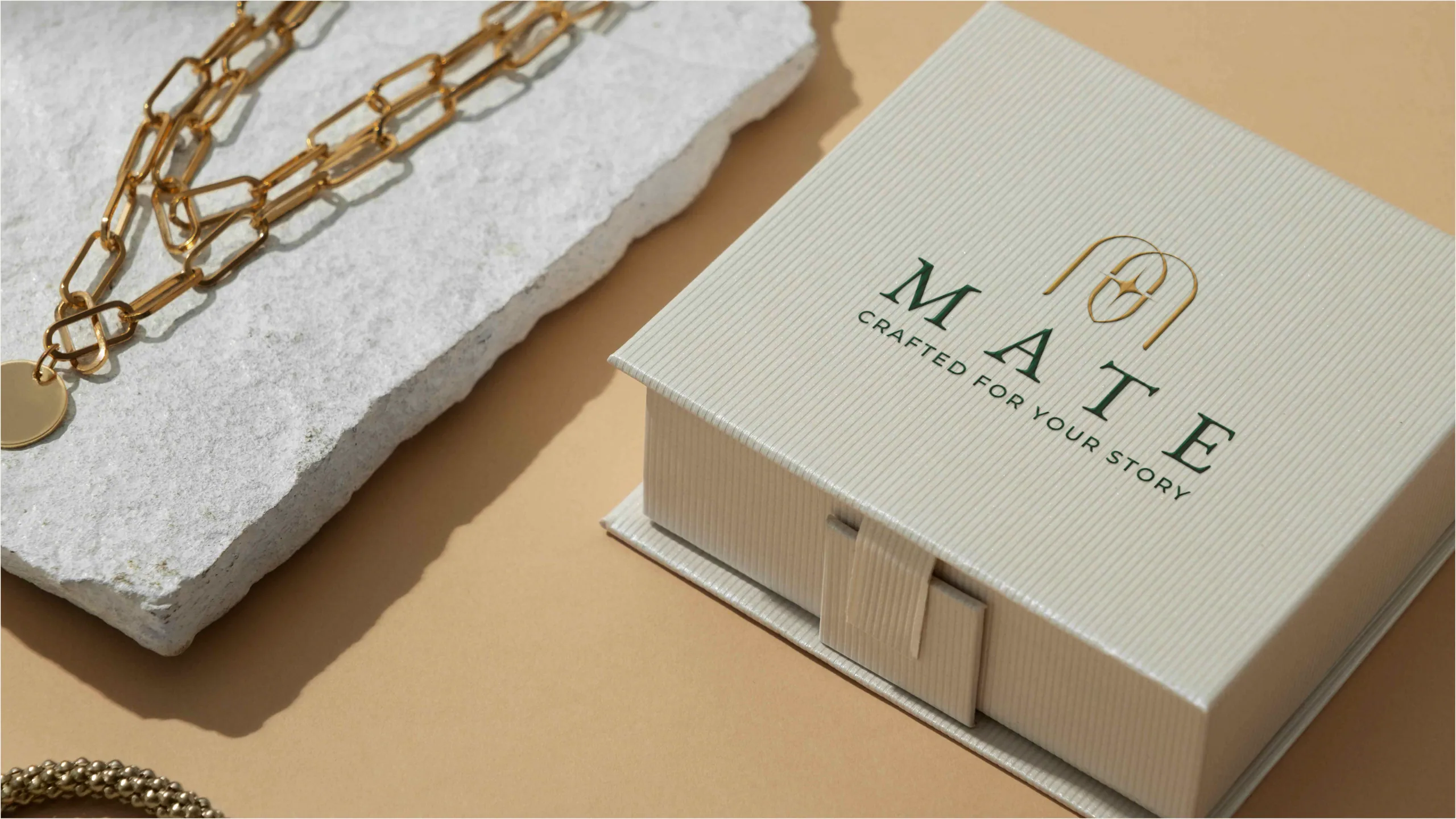
When we built MATE Jewelry, the identity ran from a custom monogram and a forest-green and gold palette all the way to surface patterns, packaging mockups, and social templates. That range matters. A jewelry buyer holds the box, turns the piece over, reads the card. Each of those moments either reinforces the brand or quietly undermines it.
A complete kit usually covers:
- A primary logo plus the variants you actually need: badge, vertical, icon, wordmark.
- A type system, typically one display face and one workhorse for body and labels.
- A color system with tokens, not just hex codes pasted into a doc.
- Photography and art direction so every shoot looks like it belongs to the same brand.
- Packaging, tags, and collateral, because in fashion the unboxing is part of the product.
- A voice: how the brand writes a product description, an email, a care card.
How do you build desire into a fashion brand?
Desire comes from a clear point of view, not from louder marketing. People want what feels specific, owned, and slightly out of reach. Generic luxury signals are everywhere now. The brands that pull are the ones that pick a stance and hold it across every touchpoint.
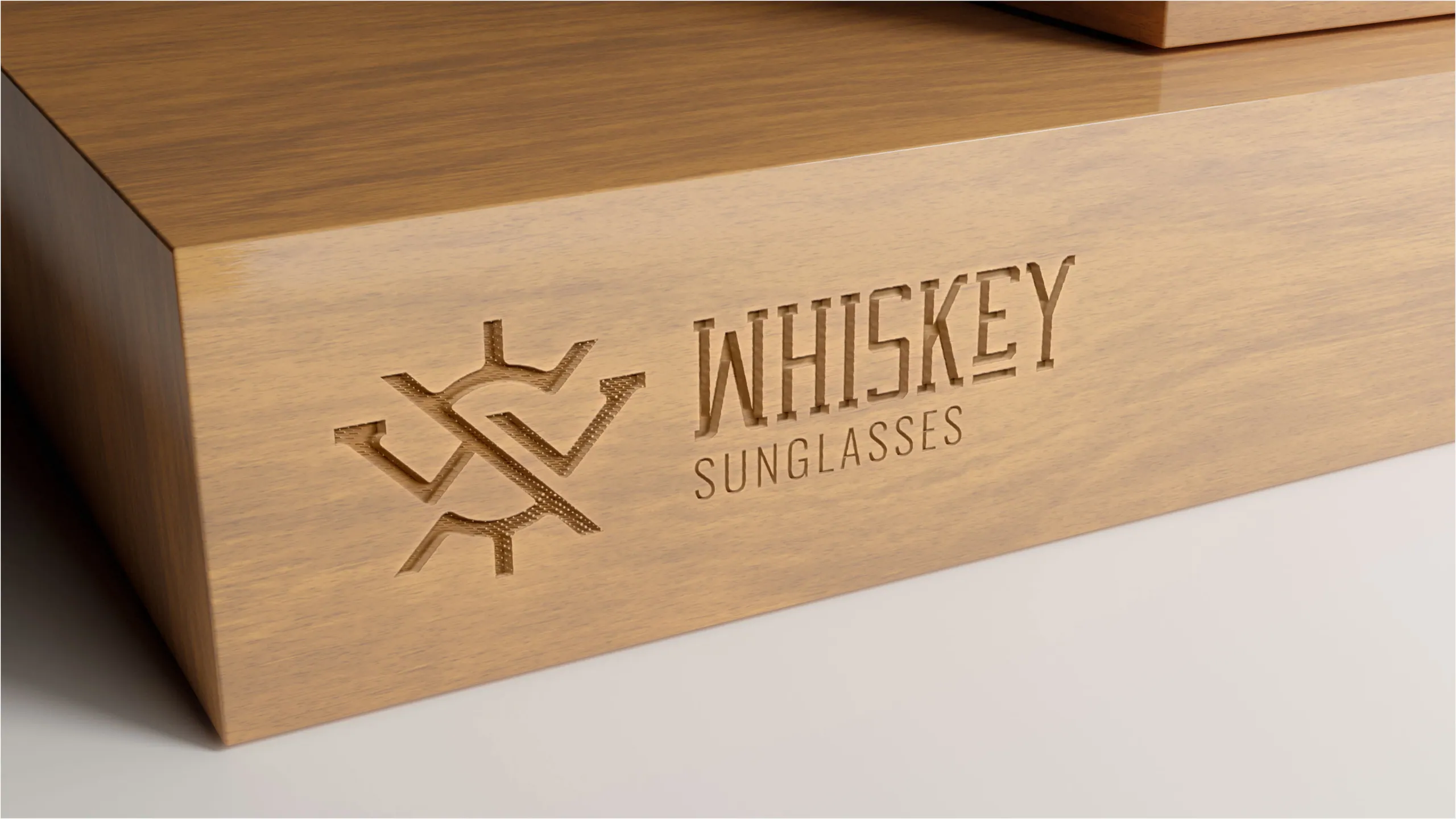
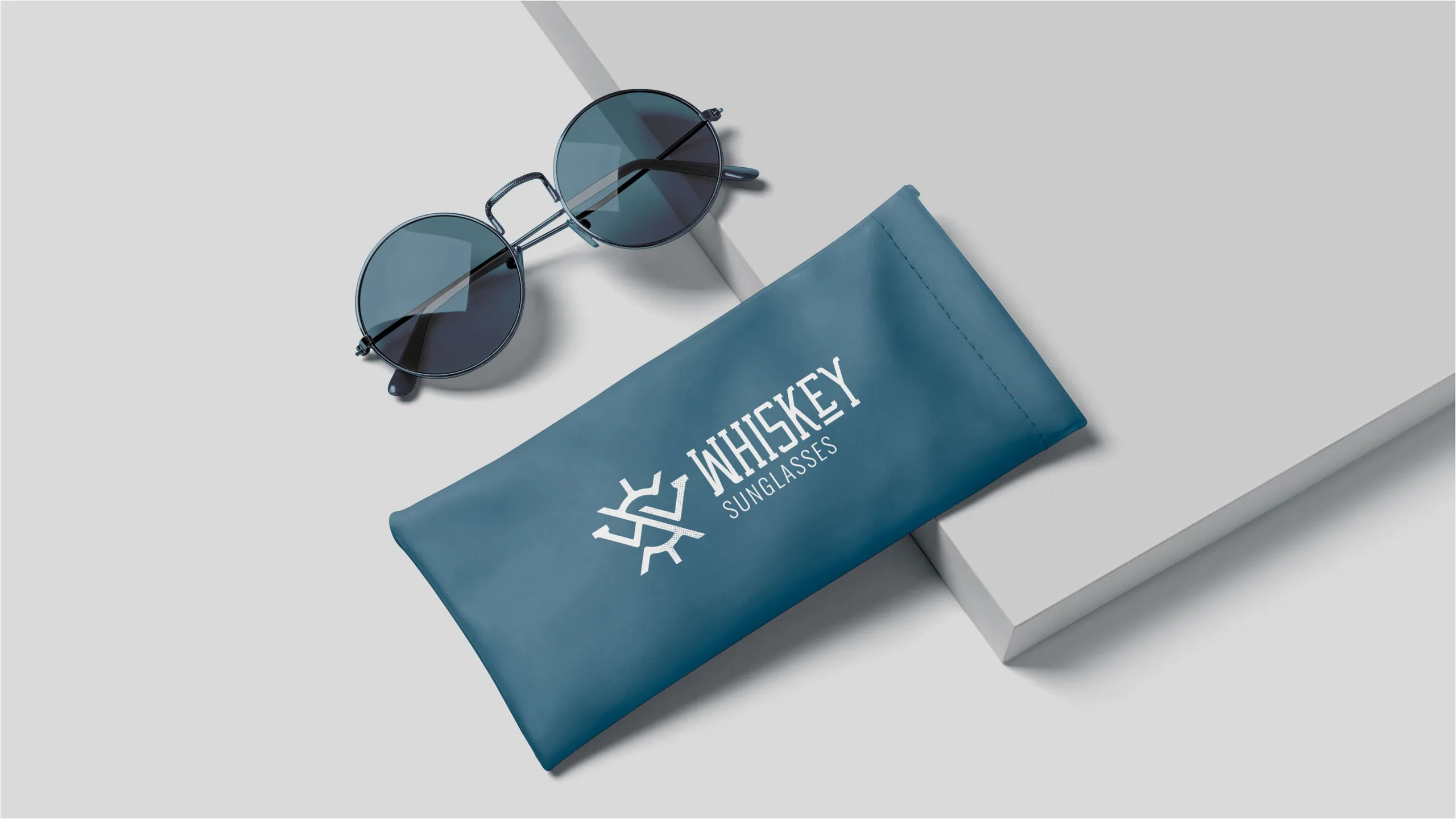
With Whiskey Sunglasses, the stance was Western craft heritage. That single idea decided the W/S monogram, the burnt-orange and slate-blue palette, the tactile retail mockups, the whole tone. Nothing in the system fights it. When a brand commits like that, the customer can tell what it stands for in three seconds, and that legibility is what reads as taste.
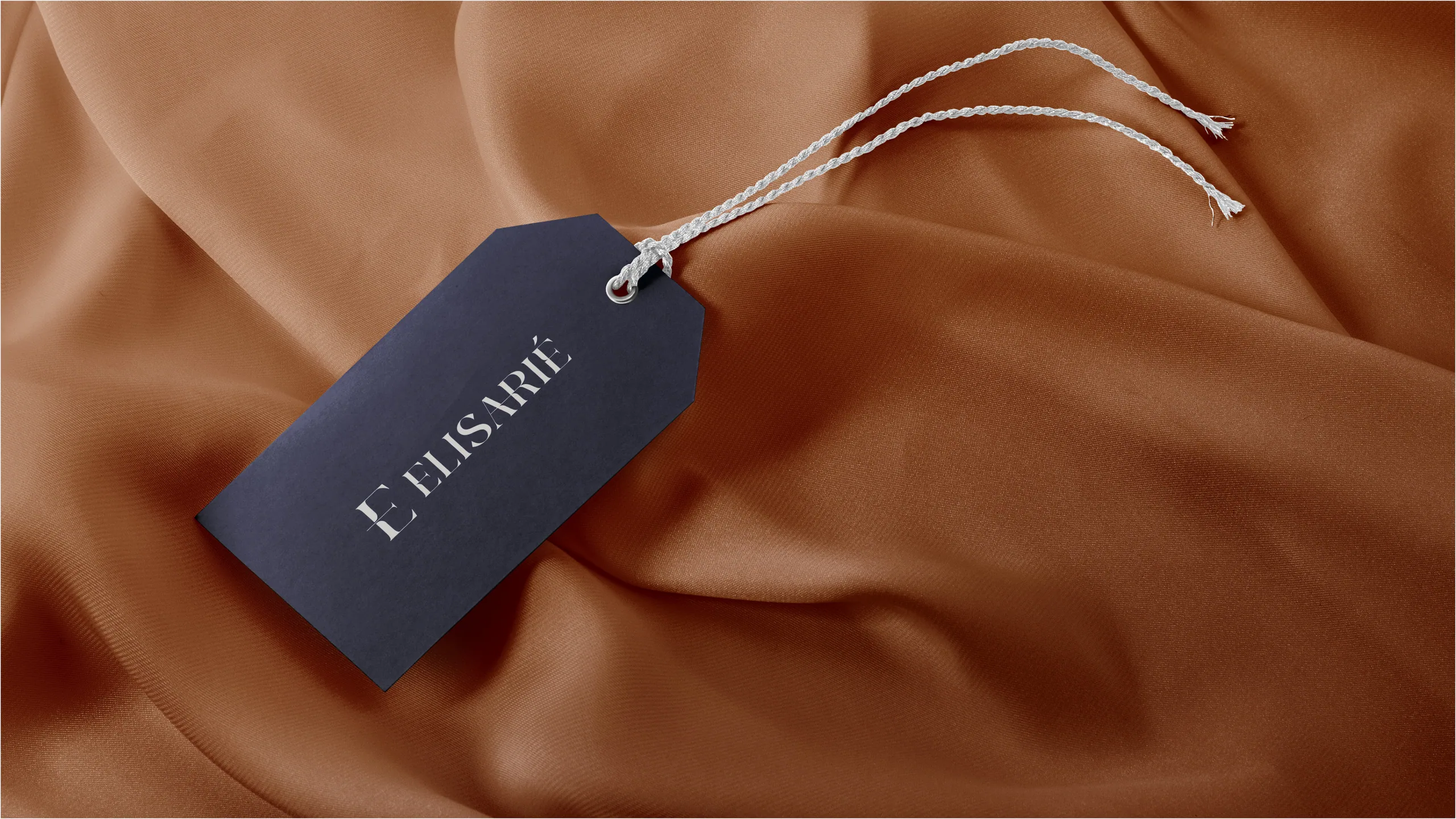
Restraint is the underrated half of desire. Elisarié was built on precision: a custom serif wordmark, a navy and terracotta palette, a typographic system disciplined enough to hold across signage, hang tags, and packaging. The brand feels expensive because it never overreaches. In jewelry and fashion especially, the empty space and the things you leave out say as much as the mark itself.
How do you build a jewelry brand specifically?
Jewelry branding leans harder on narrative and material than apparel does, because the purchase is emotional and often tied to a moment. A ring or a pendant carries personal meaning, so the brand has to give the customer a story worth attaching to.
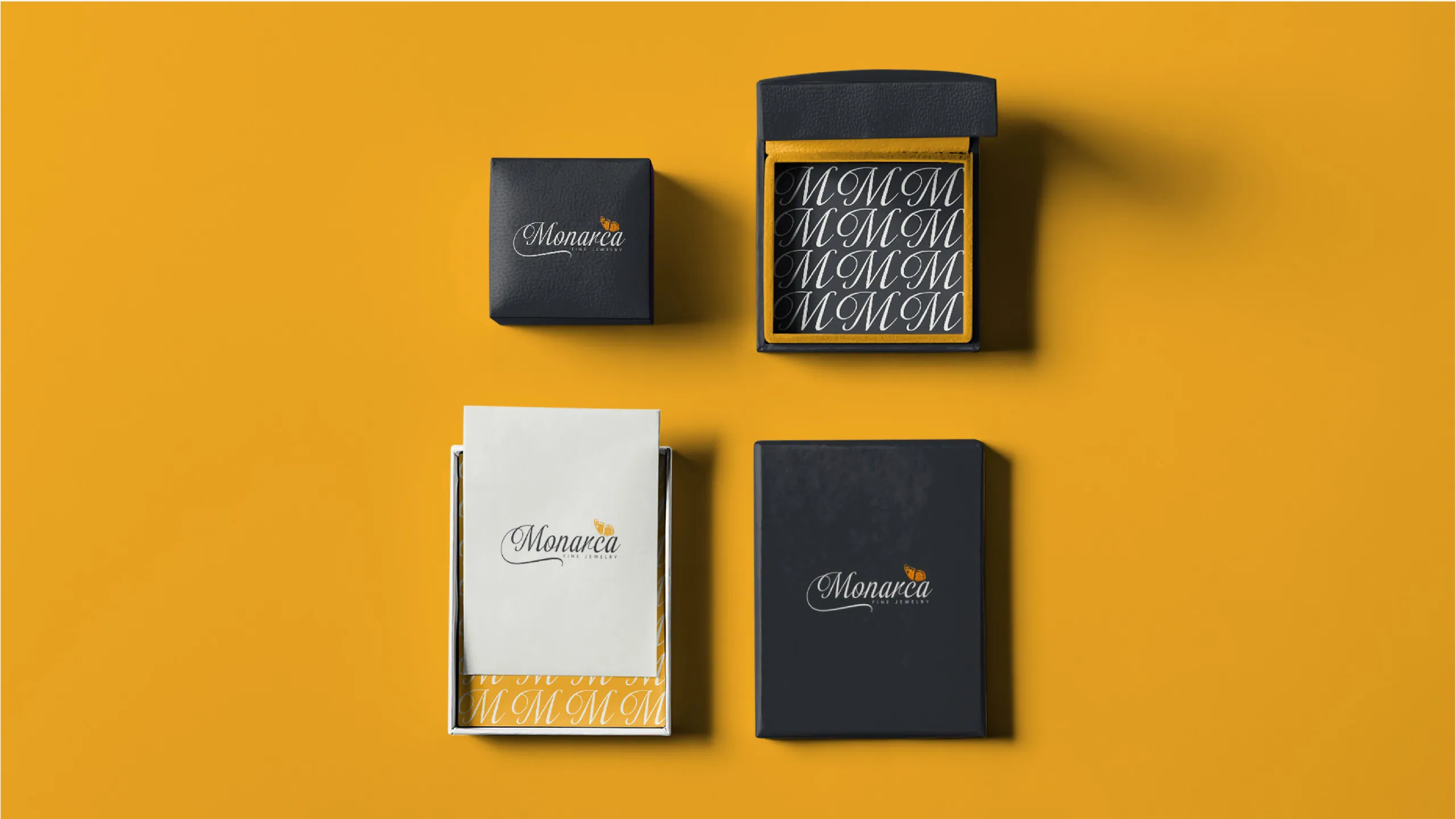
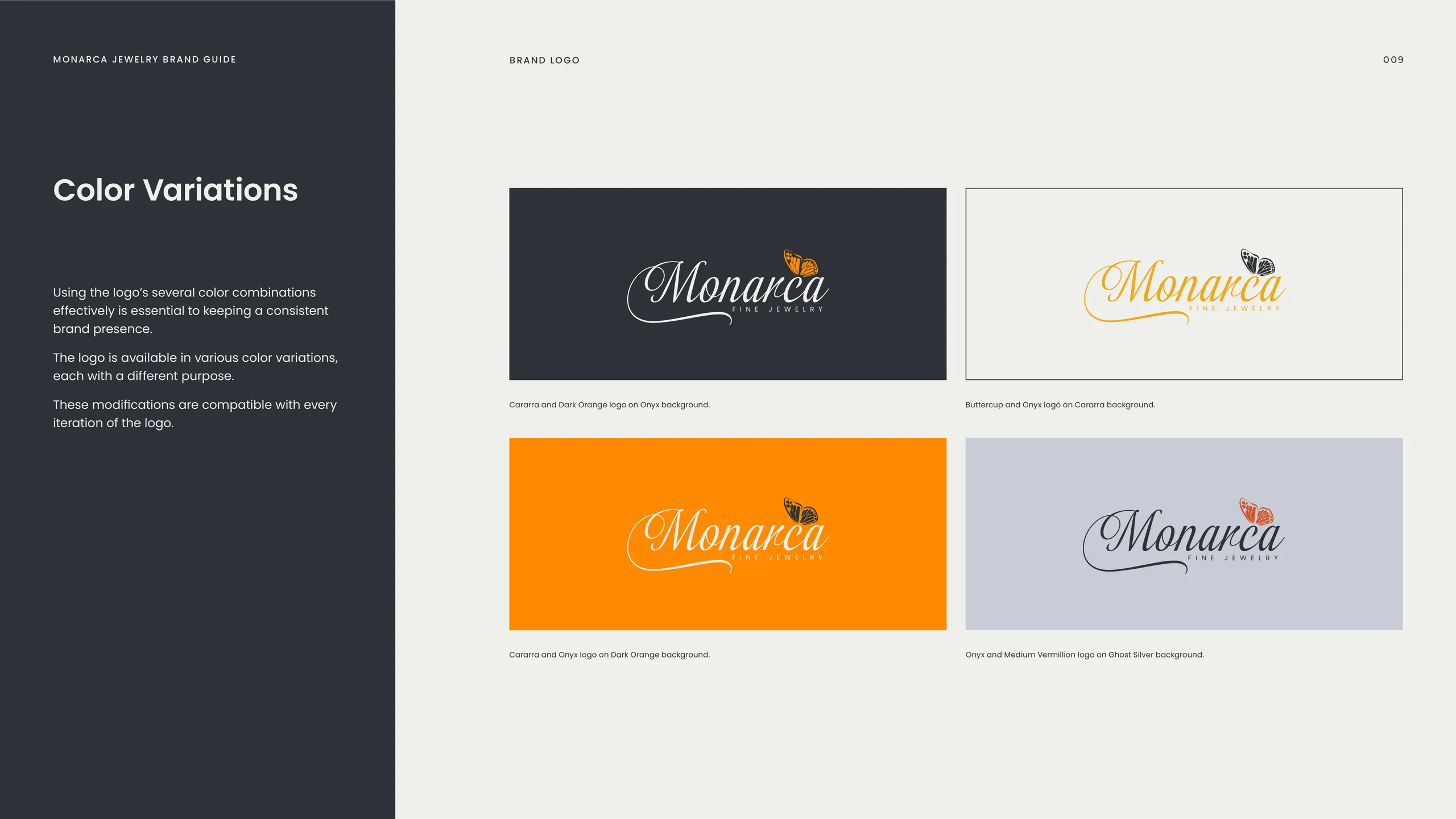
Monarca Jewelry is a good example of building identity around that emotional weight. The work treats the brand as something a person commits to, not a quick add-to-cart.
For jewelry founders, three things move the needle:
- Material honesty. Show the metal, the stone, the finish at real scale. Trust is built on detail.
- A narrative the buyer can borrow. MATE was built around personal narrative on purpose. The customer wears the story, not just the piece.
- Packaging that justifies the price. The box is the first physical proof that the brand is what it claimed online.
Jewelry also rewards patience in the visual system. Tight monograms, refined type, and a restrained palette age better than trend-driven choices that look dated by the next season.
What is DTC fashion brand design and why does it matter?
DTC fashion brand design is identity built for a direct-to-consumer model, where the website is the flagship store and every pixel has to sell without a salesperson. There is no boutique associate to close the sale, so the brand system carries that load.
This changes the priorities. Product photography has to do the job of a fitting room. Copy has to answer objections a customer would otherwise ask in person. Page speed and mobile layout become brand attributes, because a slow, clumsy site reads as a cheap brand no matter how good the logo is. Our branding service treats the DTC site and the identity as one project for exactly this reason. An identity that looks great in a PDF but falls apart on a product page has failed at the only place that matters.
The payoff is measurable. Across our DTC work the average conversion uplift after a rebrand is 2.4x. That lift does not come from a prettier logo. It comes from the whole system, message, design, and page, finally pulling in the same direction.
How do you stand out in a saturated market?
You stand out by being specific where competitors are generic, and consistent where they are sloppy. Saturation is real in fashion and jewelry, but most of the field competes on the same three or four borrowed luxury cues, which leaves an opening for any brand willing to actually choose a position.
Start by mapping what your competitors sound and look like. When the category all uses the same minimal sans-serif, the same beige photography, and the same “elevated essentials” copy, sameness becomes the trap and difference becomes cheap to claim. Whiskey Sunglasses did not look like other eyewear brands because it refused the default eyewear aesthetic and committed to a heritage story instead.
Consistency is the second lever, and it is the one most small brands drop. A strong identity applied unevenly across the site, the feed, and the packaging dilutes fast. The brands that punch above their size are the ones where every touchpoint was built from the same tokens, so the system holds even as the brand scales.
How long should building a fashion brand take?
A focused fashion brand build takes about a week when the process is designed for it, not a quarter. Long timelines do not produce better brands. They produce more rounds of revision and a position that drifts before launch.
We run brand and jewelry work as a seven-day sprint: positioning and competitive read on day one, visual identity next, then the DTC site build, launch assets, and ship. The compression is the point. It locks the look while the founder’s conviction is still sharp and gets the label in front of customers before the season turns. You can read the full day-by-day in our seven-day brand sprint breakdown.
Speed only works because the infrastructure underneath is settled. We have run fashion branding and identity work across more than 1,000 brands since 2018, which means the build pipeline, the accessibility baseline, and the deploy flow are not reinvented per client. The custom thinking goes into your positioning and your look. The plumbing is already solved.
What does a fashion brand need before launch?
Before launch, a fashion brand needs a finished identity kit, a DTC site that sells, launch assets, and the analytics to learn from day one. Missing any one of these turns a launch into a soft opening nobody notices.
A practical pre-launch checklist:
- Identity kit with all logo variants, type, color tokens, and usage rules.
- Product photography and art direction that match the brand, not stock energy.
- A live, fast, mobile-first store with copy that answers objections.
- Packaging and unboxing designed as part of the experience.
- Launch collateral: social templates, email headers, a sales one-pager.
- Tracking in place so the first week of real traffic teaches you something.
Get those right and the brand launches as a coherent thing rather than a logo with a store bolted on.
Ready to build it?
A fashion or jewelry brand is a system, and systems are best built whole, fast, and in one direction. If you are launching or rebranding a label and want identity, site, and launch assets handled together, start a conversation with us. Show us the line and the customer, and we will map what it takes to make people want to be seen wearing it.
More from the blog
Beauty branding: how to build a cosmetics brand that sells on shelf and on social
Beauty branding is the system of identity, packaging, and story that makes a cosmetics brand recognizable and worth paying for. Here's how to build one.
Brand sprint vs traditional agency: which rebrand is right for you?
A 7-day brand sprint delivers the same core artefacts as an 8-12 week agency rebrand, at a fixed price. It removes waiting, not work. Here's the honest comparison.

Branding for AI and tech startups: how to look as credible as your technology
Brand an AI or tech startup by making the technology legible, the category clear, and the proof obvious. Here's the playbook we use on every build.